 Business License
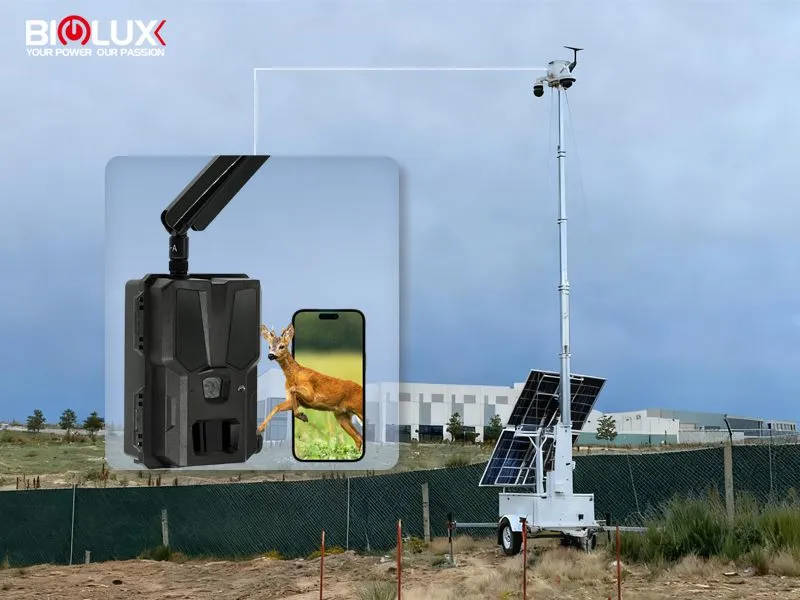
Trapper Camera System On Mobile Solar Tower
Trapper Camera System On Mobile Solar Tower
In New Zealand, the management of large invasive pest animals (such as possums, feral pigs, and deer) has long been a critical challenge for conservationists, farmers, and land managers. Traditional trap monitoring methods often face bottlenecks like limited power supply in remote areas and lack of real-time data transmission. However, the combination of mobile solar towers and trapper camera systems is emerging as a breakthrough solution—especially for users needing off-grid, cellular-connected remote monitoring. Below is a detailed analysis of this solution, grounded in real product capabilities and industry needs.
1. Core pain points of large pest trap monitoring in New Zealand
Before exploring the solution, it’s essential to address the key challenges that local users face, which directly drive the demand for solar-powered trapper camera systems:
· No grid power in remote trap locations: Most large pest traps are set in wilderness areas (e.g., forests, rural farmlands) where traditional electrical infrastructure is unavailable, making wired cameras impractical.
· Need for 24/7 real-time monitoring: Delayed detection of pest activity can lead to missed trapping opportunities or even trap damage; real-time data is critical for timely intervention.
· Harsh environmental resistance requirements: New Zealand’s variable climate (heavy rain, low temperatures in the South Island, and coastal salt spray) demands durable equipment that resists rust, water, and cold.
· Dependence on cellular data transmission: Remote areas lack Wi-Fi, so the camera system must rely on mobile cellular networks to send footage and trap status updates.
2. Why mobile solar towers are ideal for trapper camera systems
BIGLUX’s mobile solar trailers are uniquely designed to solve the above pain points. Their core advantages align perfectly with New Zealand’s pest monitoring needs:
· Off-grid solar power supply for non-stop operation:
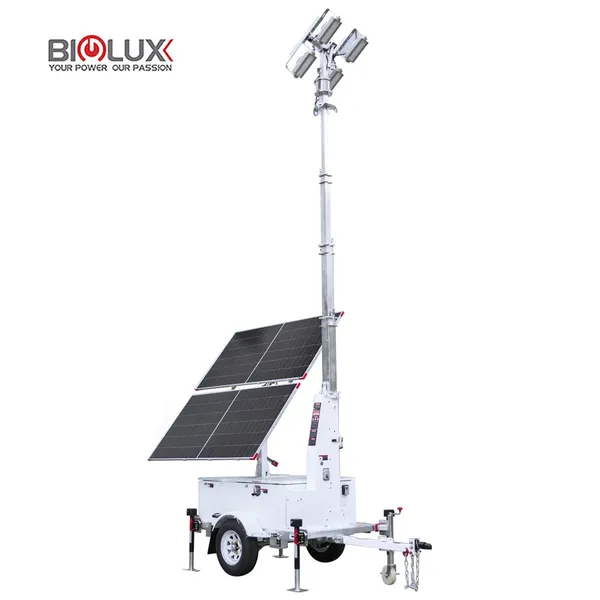
· Equipped with multi-panel solar setups (up to 1200W power rating) that support 180° full rotation and 30-60° electric tilt. This maximizes sunlight absorption—even in New Zealand’s southern latitudes where sunlight angles vary seasonally.
· Compatible with three battery types: GEL, LFP, and low-temperature lithium batteries. The low-temperature lithium option operates reliably down to -20°C, making it particularly valuable for New Zealand’s cold regions (e.g., Otago) and preventing battery failure in freezing conditions.
· Large battery capacity (up to 48kWh) ensures the system runs 24/7, even on cloudy days.
· Fast, flexible deployment in wilderness areas:
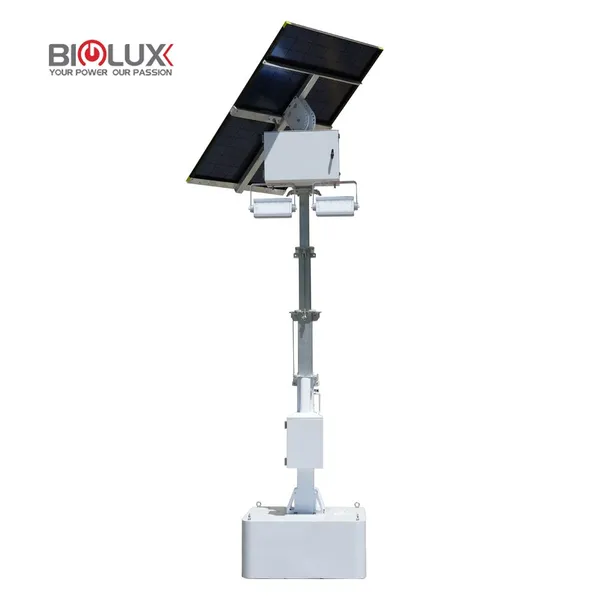
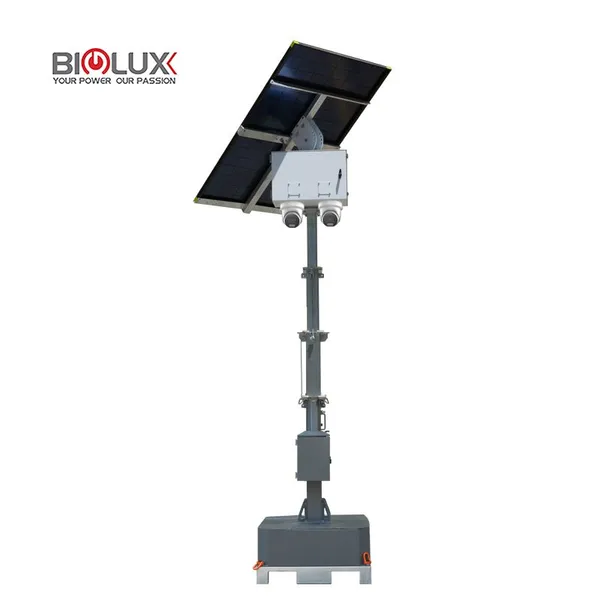
· Built with a forklift/trailer base design—no complex infrastructure is needed. Users can easily move the tower between multiple trap sites (e.g., from a forest edge to a farm boundary) using standard equipment.
· Shortens setup time: Unlike fixed solar installations, the trailer can be operational within hours, reducing downtime for trap monitoring.
· Durable build for New Zealand’s climate:
· IP65+ waterproof and dustproof rating, protecting internal components (cameras, batteries, cellular modules) from heavy rain and dust.
· Hot-dip galvanized trailer chassis (3x thicker than electroplating) provides strong corrosion resistance, ideal for coastal areas where salt spray accelerates rust.
3. Key adaptations for trapper camera system needs
The mobile solar tower isn’t just a power source—it’s a fully integrated platform that supports the specific functions of New Zealand’s pest trapper cameras:
· Cellular data connectivity support:
· The system’s CCTV box features a POE (Power over Ethernet) interface and offers DC 24V/48V & AC 110V/220V power outputs. Suitable for areas without cellular network, but stability depends on actual terrain and line-of-sight conditions.
· Multi-camera coverage for large traps:
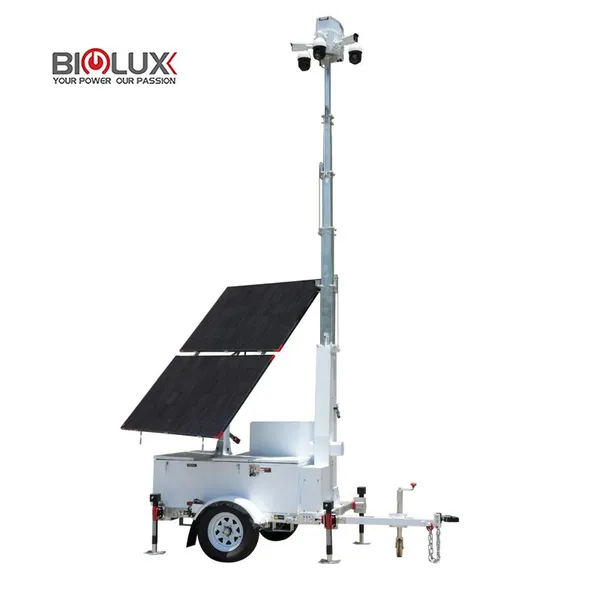
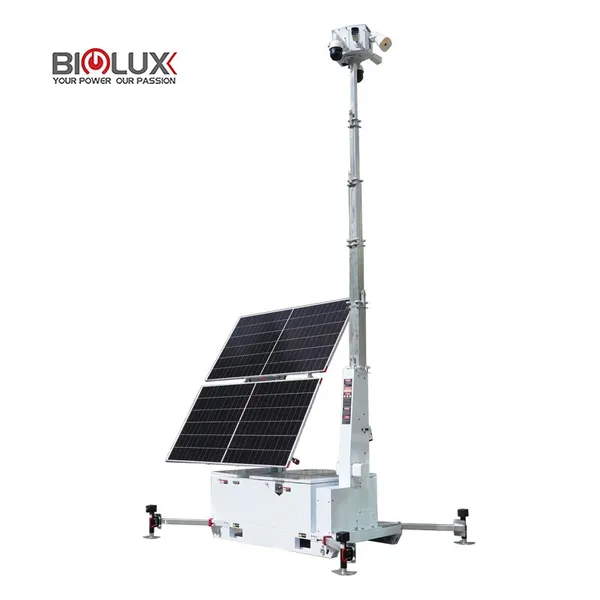
· The tower can accommodate up to 6 cameras, enabling 360° monitoring of large trap enclosures. Cameras can be mounted on a telescopic mast (extending up to 9m) for wider coverage—critical for tracking pest movements around large traps.
· Remote monitoring and trap control:
· Integrated with an MPPT (Maximum Power Point Tracking) system that supports remote management. Users can remotely check camera footage, battery levels, and solar charging status via a mobile app or web portal.
· The system’s flexible power outputs also support remote trap triggering devices (e.g., electric gates or sedative injection mechanisms), allowing users to activate traps from a distance once pests are detected.
4. Industry trends: Customization and efficiency in pest monitoring
As New Zealand’s pest control efforts shift toward smarter, more cost-effective solutions, the mobile solar trapper camera system aligns with two key industry trends—backed by BIGLUX’s capabilities:
· Tailored configurations for specific pests:
· BIGLUX offers hardware and software customization, such as adding low-light cameras for nocturnal pests (e.g., possums) or thermal imaging modules (compatible with the system’s power outputs) for detecting pests in dense vegetation.
· Users can also customize the trailer’s color or add logos, supporting branding for conservation organizations or farming businesses.
· Fast delivery and reliable after-sales support:
· Standard samples are shipped within 2 weeks, and bulk orders take approximately 1 month (per FAQ)—critical for time-sensitive pest control projects (e.g., pre-breeding season trapping).
· A 2-year warranty and 48-hour technical response time ensure minimal downtime. For example, if a camera malfunctions in a remote area, BIGLUX’s team provides video-guided troubleshooting, avoiding costly on-site repairs.
5. Conclusion: Balancing conservation and practicality
The trapper camera system on mobile solar towers addresses New Zealand’s unique pest monitoring needs by solving power, connectivity, and durability challenges. For land managers, this solution means:
· Reduced reliance on manual patrols (cutting labor costs by replacing 3 full-time guards, per BIGLUX’s product highlights);
· 24/7 real-time data to improve trapping efficiency;
· Compliance with New Zealand’s eco-friendly policies (zero fuel consumption, solar-powered operation).
As BIGLUX continues to refine its mobile solar technology—with a track record of serving global markets (North America, Middle East, Europe)—the system is poised to become a standard tool for large pest control in New Zealand, blending conservation goals with practical, off-grid functionality.
Recently Posted
-
What Kind of Role Do Mobile Solar Surveillance Trailers Play in Smart City Initiatives?
December 18, 2025A core prerequisite for smart cities to move toward refined governance is "security." However, traditional fixed s Read More
 -
What are Mobile Solar Light Trailers Used For?
December 17, 2025Mobile solar lighting trailers are revolutionizing off-grid lighting with their portability, sustainability, and versat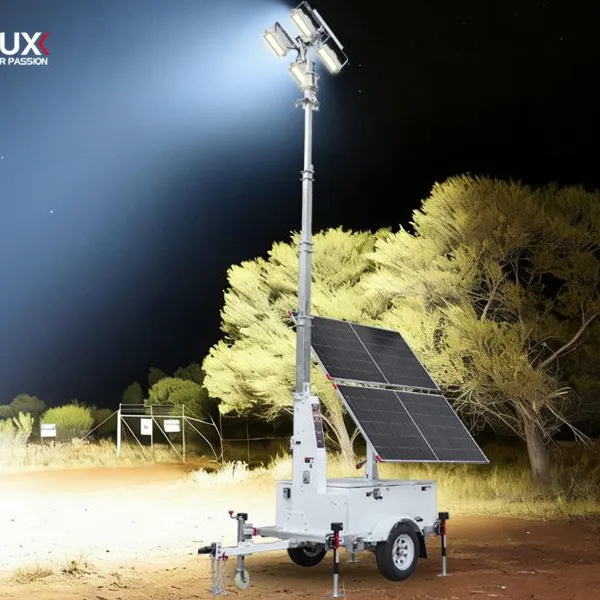 Read More

Contact Us
Recommended Products
-
 HiTOP Solar Powered Camera Kit With 4MP Night Vision Security Surveillance Solar Energy SystemUS$ 1099MOQ: 1 Unit
 -
HiSTAR-V Solar Security CCTV Tower 5 Solar Panels Rapid Deployment for Outside MonitoringUS$ 10976MOQ: 1 Unit
-
HiCUBE Solar Surveillance Tower With 3*450W Solar Panels High Power for Outdoors SecurityUS$ 8999MOQ: 1 Unit
-
HiSKID-II Solar Lighting Tower With LED Lights and 7m Manual Mast for Mining WorkUS$ 6899MOQ: 1 Unit
-
HiSKID-II Solar Power CCTV Tower With Skid Base for Construction Site SecurityUS$ 6529MOQ: 1 Unit
-
HiGUARD Solar Light Tower With LED Lamps for Parking Lots LightingUS$ 3365MOQ: 1 Unit
-
HiGUARD Mobile Solar Off-Grid Security Tower With 4m Manual Mast for Outside MonitoringUS$ 2999MOQ: 1 Unit
-
HiSOLO Mobile Solar Light Tower With 4*100W LED Lights for Temporary LightingUS$ 6999MOQ: 1 Unit
-
HiSOLO Mobile Solar Surveillance Trailer With 7m Manual Mast for Outdoor SecurityUS$ 6679MOQ: 1 Unit